
Apache Junction Lawn Mowing Services
Choose our expert lawn mowing services for reliable, professional care that keeps your yard looking its best all season long—so you can enjoy a beautiful, healthy lawn without the hassle.
Get a Free QuoteOur Apache Junction Landscaping & Yard Care Services
When to Schedule Lawn Mowing in Apache Junction, Arizona – Seasonal Guide
In Apache Junction, Arizona, the timing of your lawn mowing is crucial for maintaining a healthy, vibrant yard. The region’s unique Sonoran Desert climate means that grass growth patterns differ from those in cooler or more humid areas. Typically, the optimal mowing season begins in early March, after the last frost, and extends through late October. Neighborhoods near the Superstition Mountains or along Ironwood Drive may notice that shaded lawns under mature mesquite or palo verde trees require less frequent mowing, while open, sun-exposed yards in subdivisions like Gold Canyon Ranch may need more regular attention.
Local environmental factors such as drought risk, sandy or clay-heavy soils, and fluctuating humidity levels all play a role in determining the best mowing schedule. For example, lawns in areas with higher tree density or near the Apache Junction City Park may experience more shade and slower grass growth. It’s also important to stay informed about municipal watering restrictions and seasonal precipitation, which can impact both mowing frequency and grass health. For more information on local guidelines and resources, visit the official city website.
Local Factors to Consider for Lawn Mowing in Apache Junction
- Tree density and shade coverage (e.g., mature trees in Superstition Foothills)
- Soil type (sandy vs. clay-heavy soils)
- Seasonal precipitation and drought risk
- Frost dates (typically late February to early March)
- Municipal watering restrictions
- Terrain and slope of your property
- Proximity to natural landmarks or washes
Benefits of Lawn Mowing in Apache Junction
Professional Lawn Care Experts
Consistent Scheduling
Enhanced Curb Appeal
Time-Saving Services
Reliable Local Team
Eco-Friendly Practices
Apache Junction Lawn Mowing Types

Standard Lawn Mowing
-
Mulching Mower Service
-
Bagging Mower Service
-
Reel Mower Cutting
-
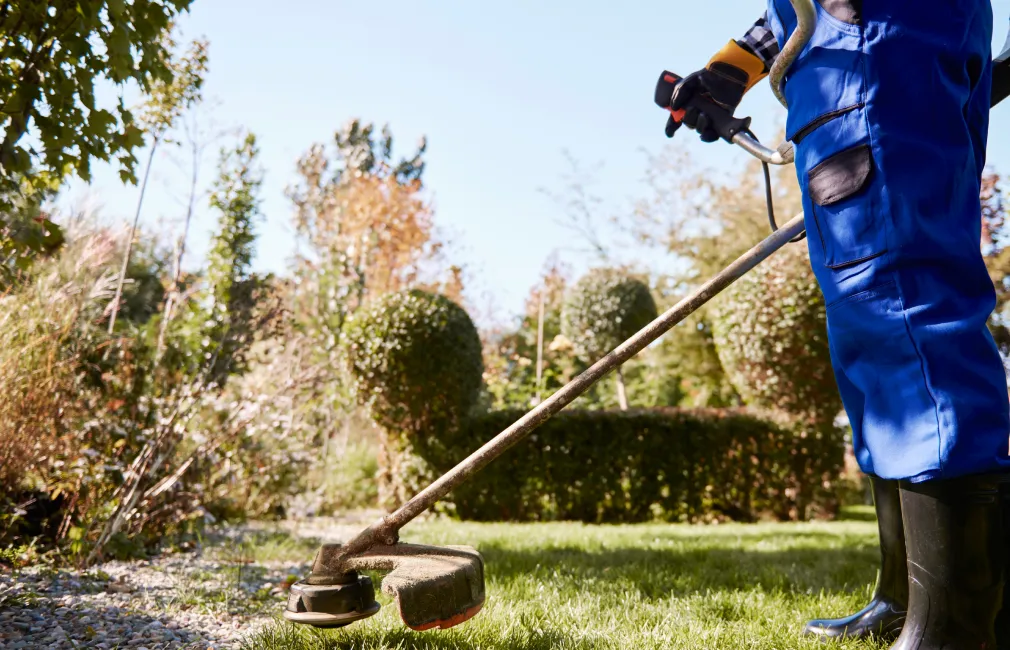
Edging and Trimming
-
Seasonal Lawn Scalping
-
Commercial Property Mowing
Our Lawn Mowing Process
Site Evaluation
Lawn Preparation
Mowing Execution
Edging and Trimming
Cleanup
Why Choose Apache Junction Landscape Services
-
Apache Junction Homeowners Trust Us
-
Reliable Lawn Maintenance
-
Competitive Pricing
-
Professional Team
-
Satisfaction Guarantee
-
Personalized Service
-
Timely Project Completion
Coordinating Lawn Mowing Services with Apache Junction's Municipal Departments
Lawn mowing in Apache Junction requires awareness of city operations that affect turf maintenance on residential and commercial properties. The city's Code Compliance Division enforces property maintenance standards, including vegetation height and lot upkeep, to protect neighborhood appearance and public health. Properties that fall out of compliance may receive notices requiring corrective action within a specified timeframe. Residents and property managers should verify current enforcement thresholds directly with the division before assuming compliance. Green waste generated from routine mowing—such as bagged clippings and small debris—must be managed according to the city's disposal guidelines. Clippings should never be swept or blown into streets, curb inlets, or drainage channels, as this contributes to stormwater contamination. The city's Public Works Department oversees drainage facility maintenance and can advise on proper curbside handling of organic yard waste.
- Confirm vegetation height and lot maintenance standards through the Code Compliance Division before scheduling service
- Keep grass clippings out of streets, gutters, and storm drain inlets
- Coordinate bulk green waste disposal with Public Works if large volumes are generated
- Review the city's stormwater pollution prevention program for guidance on yard waste and runoff
Apache Junction Code Compliance Division
Official Website: Code Compliance Division
Apache Junction Public Works Department
Official Website: Public Works
How Apache Junction's Desert Heat and Alkaline Soils Affect Lawn Mowing
Apache Junction sits in the eastern Phoenix metro low desert, classified within USDA Hardiness Zone 9b to 10a, where summer temperatures routinely exceed 110°F and annual rainfall averages under ten inches. These conditions create specific challenges for turf maintenance. Soils throughout the area tend to be highly alkaline, often with caliche layers or compacted decomposed granite beneath a thin layer of imported topsoil in subdivisions. This soil profile limits root depth and water infiltration, meaning turf can become stressed quickly if mowing practices are not adapted to the environment. Reflected heat from block walls, concrete driveways, and gravel yards intensifies thermal stress on turf edges. During monsoon season, typically July through September, sudden heavy rainfall can cause sheet flow across yards and into nearby washes, carrying clippings and sediment if not properly managed. The University of Arizona Cooperative Extension provides region-specific guidance on turf species and maintenance adapted to these low-elevation desert conditions.
- Alkaline soils (pH commonly above 7.5) affect nutrient availability and turf vigor
- Caliche and compacted fill restrict root penetration and drainage
- Reflected heat from adjacent hardscape raises effective temperatures along turf borders
- Monsoon runoff can mobilize loose clippings into washes and retention basins
Apache Junction's Code Compliance and Stormwater Rules for Lawn Mowing Operations
Property owners and lawn care operators in Apache Junction must comply with municipal code provisions governing property maintenance, vegetation management, and stormwater protection. The Code Compliance Division addresses overgrown lots, weed accumulation, and neglected turf as part of its enforcement of neighborhood appearance and public safety standards. Separately, the city's stormwater pollution prevention program, aligned with Arizona DEQ Phase II MS4 requirements, prohibits the discharge of yard waste, sediment, or chemical runoff into the municipal storm sewer system. Mowing operators should ensure that clippings are contained on-site or collected, not discharged into streets or drainage infrastructure. Commercial lawn care providers applying any herbicide or pesticide in conjunction with mowing must hold appropriate credentials through the Arizona Department of Agriculture's Office of Pest Management. The Arizona Department of Water Resources also provides landscaping conservation guidance relevant to irrigation scheduling around mowing.
- Do not blow or discharge grass clippings into storm drains, washes, or public rights-of-way
- Verify that any chemical applications are performed by properly licensed applicators
- Maintain turf at heights consistent with municipal property maintenance expectations
- Review stormwater obligations through the city's Stormwater Pollution program page
Apache Junction Stormwater Pollution Prevention
Official Website: Stormwater Pollution
Timing and Mowing Height Standards for Apache Junction's Low Desert Turf
Bermudagrass is the dominant warm-season turf in Apache Junction, often overseeded with perennial ryegrass during the cooler months from October through March. According to the University of Arizona Turfgrass Maintenance Guide, bermudagrass lawns in low-elevation Arizona should generally be maintained at a mowing height of approximately 1 to 1.5 inches for common bermuda and 0.5 to 1 inch for hybrid varieties, while overseeded ryegrass is typically kept at 1.5 to 2.5 inches. Mowing should follow the one-third rule: never remove more than one-third of the grass blade height in a single cut. During peak summer, mowing early in the morning—before temperatures climb—reduces heat stress on both the turf and the operator. Irrigation should be scheduled so that turf is not waterlogged at the time of mowing, which helps prevent soil compaction and rut formation on Apache Junction's often shallow, imported topsoil profiles.
- Mow bermudagrass at 1–1.5 inches; hybrid bermuda at 0.5–1 inch
- Maintain overseeded ryegrass at 1.5–2.5 inches during winter months
- Follow the one-third rule to avoid scalping and heat shock
- Schedule mowing before mid-morning during summer to reduce turf stress
- Irrigate after mowing rather than before to prevent compaction and clumping
- Sharpen mower blades regularly; dull cuts increase moisture loss in arid conditions
What Neighborhoods Do We Serve Throughout Apache Junction, AZ?
- Superstition Foothills — Properties in this area often feature sloped lots with desert-adjacent landscaping, where turf sections require careful mowing to prevent clipping runoff toward natural washes and drainage corridors.
- Ironwood Village — This established community includes irrigated turf areas on compact lots where reflected heat from nearby walls and driveways intensifies summer mowing stress on bermudagrass.
- Desert Shadows — Homes here frequently maintain small to mid-sized lawn areas on imported topsoil over native desert fill, requiring attention to mowing height to avoid scalping on uneven grade.
- Meridian Manor — Residential lots in this subdivision commonly feature bermudagrass lawns with overseeded ryegrass, and HOA standards may influence mowing frequency and turf appearance expectations.
- Peralta Trails — Located near the eastern edge of the city, properties in this area may border open desert or retention basins, making clipping containment and stormwater awareness particularly important during monsoon season.
- Gold Canyon (adjacent unincorporated area) — While technically outside city limits, many properties in this corridor share similar soil and heat conditions and may follow Pinal County maintenance standards rather than Apache Junction municipal codes.